Slab Leak Reroute in Fort Worth, TX
A pipe reroute bypasses the failed under-slab water line entirely — running a new supply line through walls or attic space without disturbing the concrete foundation.
When a water supply line beneath your foundation fails, one of the cleanest long-term solutions is to stop using that pipe entirely — and route a new line through the walls or attic instead. This is a slab leak reroute: the failed under-slab pipe is abandoned in place, and a completely new supply path is installed above grade.
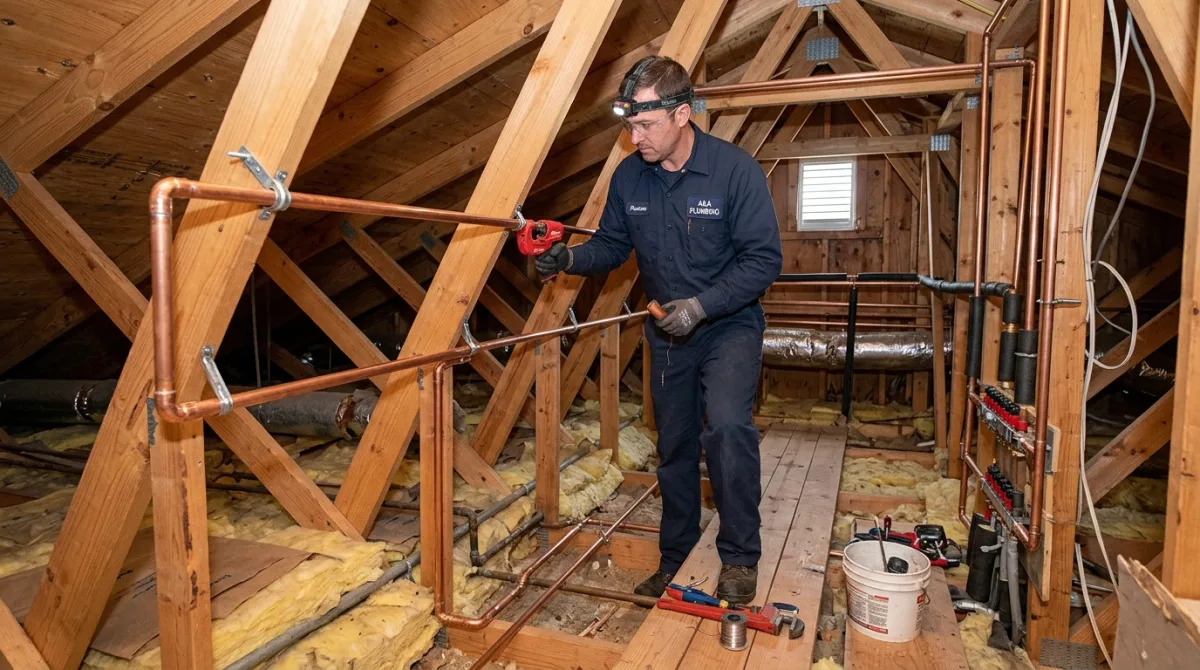
How a Pipe Reroute Works
The new supply line — typically copper or PEX — is run from the main supply connection point through wall cavities or attic space to the fixtures it needs to serve. At each end, connections are made to the existing supply system and to the fixture (shower, sink, water heater, etc.). The old under-slab pipe is capped and left in place — it's still full of the concrete and soil it was buried in, so it doesn't create a void or structural issue.
The result is a fully functional new supply line that no longer runs under the concrete slab — which means it's accessible for future inspection, maintenance, or repair without needing to disturb the foundation.
When Rerouting Makes More Sense Than a Spot Repair
- History of multiple slab leaks: If the same system has had previous leaks, the pipe material is failing and a spot repair just moves the next failure point down the line.
- Aging copper plumbing: Original copper supply lines in Fort Worth homes from the 1960s–80s are approaching or past typical service life. A reroute replaces the entire run, not just one problem section.
- Post-tension slab: When the leak location is in an area with post-tension cable risk, rerouting avoids any concrete cutting near cables entirely.
- High-value flooring: Tile, stone, or hardwood that would be expensive or impossible to match makes a slab access repair more disruptive than a reroute.
- Difficult access location: Some under-slab leak locations — beneath a load-bearing wall, under a tiled bathroom floor, or in the center of a large open space — make concrete access impractical without major floor disruption.
PEX vs. Copper for Rerouting
New rerouted lines are commonly installed in either copper or cross-linked polyethylene (PEX). PEX is flexible, easier to run through wall cavities, resistant to freezing, and does not corrode from the inside. Copper is a proven material with a long track record. The choice depends on the specific situation, local code requirements, and preferences. We'll explain the options.
Reroute FAQs
In most cases, the rerouted line runs inside walls or attic space and is not visible. In some situations — particularly for exterior runs — the line may be enclosed in conduit or chase along an exterior wall. The planner will show you the proposed route before work begins.
No. The old pipe is capped at both ends and left in place. Removing it would require extensive concrete work with no benefit — the pipe is already surrounded by soil and concrete and doesn't create structural risk when abandoned in place.
Most residential reroutes take 1–2 days for the plumbing work itself. More complex reroutes with multiple fixtures or longer runs may take longer. This does not include any drywall patching at access points, which is typically a separate finish trade.
Want to Discuss a Pipe Reroute?
Call today. We'll confirm the situation and walk through whether a reroute is the right approach for your home.