Slab Leak Repair in Fort Worth, TX
Once the leak is located, there are typically three repair paths — spot access, pipe rerouting, or tunneling. Here's what each involves and when each makes sense.
Repairing a slab leak in a Fort Worth home involves a decision that matters as much as the repair itself: which method is right for this specific situation? As your dedicated slab leak plumber in Fort Worth, we know the answer depends on where the leak is located, what type of pipe is failing, the overall condition of the plumbing system, and what makes sense in the long run.
The Three Main Repair Methods
1. Direct-Access Spot Repair
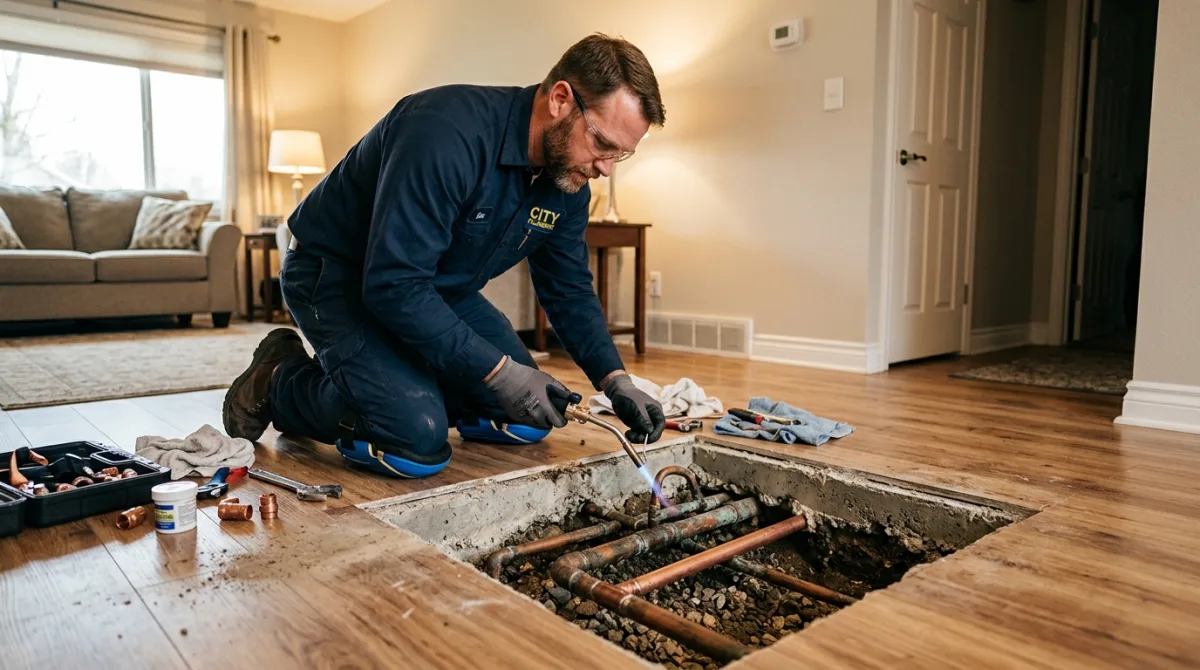
The concrete slab is opened at the confirmed leak location — typically a targeted cut, not full floor removal. The damaged pipe section is repaired or replaced, then the concrete is patched. This is straightforward when: the leak is isolated, the pipe is otherwise in good condition, and the location is accessible without hitting post-tension cables. It is often the fastest approach for an emergency slab leak repair in Fort Worth.
The limitation: if the pipe system is aging copper, a spot repair fixes one leak but the same pipe may fail again at a different location within a few years. If there's a history of multiple leaks, a reroute is usually the better long-term investment.
2. Pipe Rerouting
A completely new water supply line is run through wall cavities, attic space, or along the exterior — bypassing the under-slab pipe entirely. The old line is abandoned in place (still filled with concrete and soil, so it doesn't create a structural void). The failed section simply stops being used.
Rerouting avoids concrete disturbance entirely, works around post-tension cable risk, and permanently solves the under-slab leak for that line. It's often the best choice when: the system has had previous slab leaks, the pipes are original copper approaching end of service life, or the leak is in a location difficult to access through the slab.
More on pipe rerouting →3. Tunneling
A horizontal tunnel is dug beneath the foundation from the exterior perimeter — far enough in to reach the leak without disturbing the interior floor. This allows direct access to the pipe without breaking interior flooring, and without the full rerouting cost in some situations.
Tunneling is particularly useful when interior flooring is expensive or difficult to match (custom tile, hardwood), when the leak is deeper under the slab, or when exterior access is practical.
Choosing the Right Method
We don't recommend one method for every situation. After slab leak detection in Fort Worth confirms the exact location and affected line, we explain the options honestly — including when a reroute makes more sense than repeated spot repairs on an aging system.
| Method | Best For | Floor Disturbance |
|---|---|---|
| Spot Repair | Isolated leak, good overall pipe condition | Small, targeted cut |
| Reroute | Aging system, multiple leak history, post-tension risk | None to slab |
| Tunneling | Deep access, expensive interior flooring | None to interior floor |
Post-Tension Slab Considerations
Many Fort Worth area homes from the 1970s onward have post-tension slabs — concrete reinforced with tensioned steel cables. These cables must not be cut. Before any concrete access work, the slab type is confirmed and cable locations are considered. In post-tension homes, rerouting is often the safest option when a spot repair location falls near a potential cable zone.
Repair FAQs
The concrete patch will be visible in most cases. Matching flooring — tile, hardwood, or carpet — typically requires some additional work. For expensive or difficult-to-match flooring, tunneling or rerouting may be preferable since neither requires cutting the interior floor surface.
A spot repair with direct access can often be completed in a day or two, including concrete patching. A pipe reroute typically takes 1–2 days of plumbing work. Tunneling time varies based on distance and soil conditions.
Coverage varies by policy. Many homeowner policies cover the cost of accessing the leak (the 'tear-out') but not the pipe repair itself, which significantly offsets the total slab leak repair cost in Fort Worth. Some policies cover resulting water damage. It's worth reviewing your policy and documenting everything before and during the repair. We can provide documentation of the detection findings.
Ready to Discuss Repair Options?
Call today. We'll confirm the leak location and walk you through what each repair method actually involves for your home.