
Signs You Might Have a Slab Leak
Slab leaks rarely announce themselves with obvious water pooling. Instead, they reveal themselves through subtle clues that are easy to miss or misattribute to other causes. If you're noticing any combination of these symptoms in your Fort Worth home, it's worth having the slab pressure-tested.
A significant jump in your monthly water bill — with no change in usage habits — is one of the most consistent indicators of a hidden under-slab leak.
If a section of your floor feels noticeably warmer than the surrounding area, a hot-water supply line may be leaking beneath the slab directly below that spot.
If you can hear water moving through pipes when all taps, appliances, and toilets are off, that water is going somewhere it shouldn't — possibly through a crack in a supply line beneath your slab.
Moisture migrating up through the slab can cause carpet to feel damp, hardwood to warp or buckle, or tile grout to soften and crack along a specific line across the floor.
Persistent slab leaks can saturate the soil beneath the foundation, causing uneven settling that leads to visible cracks in interior walls, door frames, or floor tiles — especially along a straight line.
If water pressure has dropped noticeably at multiple fixtures, a supply-line slab leak may be diverting water flow before it reaches your taps.
Persistent moisture under or in your floor creates conditions for mold and mildew growth. If you notice a musty smell near baseboards or flooring with no obvious source, a slab leak should be investigated.
Not Sure? Get a Pressure Test
A hydrostatic pressure test is the most reliable way to confirm whether your plumbing system has a leak. It takes pressure readings from your supply lines to identify whether water is escaping under the slab.
Learn About Pressure TestingHow Slab Leaks Are Detected
Professional slab leak detection avoids unnecessary concrete removal. The goal is to pinpoint the exact location of the leak before any access point is cut — minimizing disruption to your home.
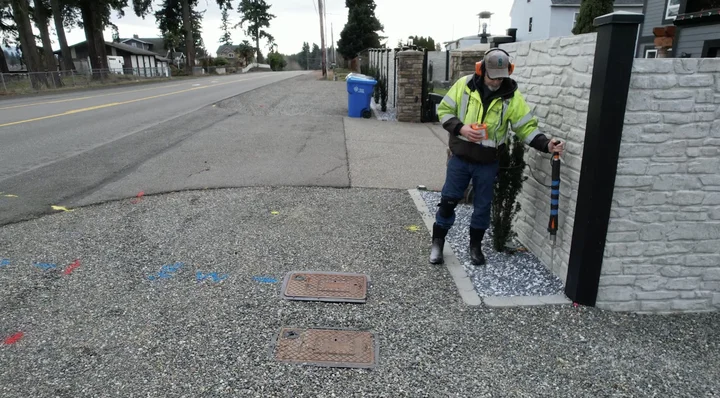
Acoustic Leak Detection
Electronic listening devices and ground microphones detect the sound signature of water escaping under pressure from a pipe. Different pipe materials and soil conditions produce different acoustic patterns, which trained technicians interpret to locate the leak.
Electronic / Correlating Leak Detection
Leak correlators use two sensors placed along the pipe at access points to calculate the exact position of the leak by measuring pressure wave timing. This method is particularly effective for locating leaks in copper or PEX lines at specific depth ranges.
Hydrostatic Pressure Testing
Before pinpointing a leak location, pressure testing confirms a leak exists and isolates which line is affected. A plug is used to pressurize the system, and pressure drop indicates where water is escaping.
Slab Leak Repair Options
There is no single "correct" way to repair a slab leak — the right approach depends on the leak location, pipe material, overall plumbing condition, and what makes sense long-term for your home.
Pipe Rerouting
A new supply line is run through walls, attic space, or along the exterior of the structure — completely bypassing the problematic section of pipe under the slab. The old line is abandoned in place. This avoids slab disturbance entirely and is often the preferred approach for older copper systems with multiple leak history.
Slab Leak Reroute Details →Direct-Access Spot Repair
The concrete slab is opened at the confirmed leak location, the damaged section of pipe is repaired or replaced, and the concrete is patched. This works well when the leak is isolated, the pipe is otherwise in good condition, and the location is accessible without major floor disruption.
Slab Leak Repair Details →Tunneling
Rather than breaking the interior floor, a horizontal tunnel is dug beneath the foundation from the exterior perimeter. This allows access to the pipe without disturbing interior flooring. Tunneling is often used for deep leaks or when flooring replacement would be expensive.
Compare Repair Methods →Why Guessing the Leak Location Gets Expensive
Breaking concrete in the wrong spot is more than an inconvenience — it adds cost for the extra concrete removal, floor repair, and still leaves the actual leak unresolved. Professional detection avoids this entirely.
Fort Worth homes built on post-tension slabs require particularly careful attention. Post-tension cables run through the slab, and cutting into the wrong location without knowing cable positions can cause significant structural damage that is far more expensive to fix than the original plumbing leak.
Electronic and acoustic detection equipment narrows the leak to a specific area — often within a foot or less. That precision is what makes the difference between a manageable repair and a project that spirals.
Fort Worth Soil Conditions
The Blackland Prairie clay soil that underlies much of Fort Worth and Tarrant County is known for dramatic expansion and contraction with moisture changes. This soil movement creates stress on under-slab pipes, accelerating wear on older copper and galvanized systems, and frequently leading to the need for sewer line repair Fort Worth residents face.
Older Housing Stock
Many Fort Worth neighborhoods — particularly Northside, East Fort Worth, and South Fort Worth — include homes built in the 1960s through 1980s with original copper supply lines. These systems are reaching the end of their typical service life.
Post-Tension Slabs
Many Fort Worth area homes built from the 1970s onward use post-tension slab construction. These slabs contain tensioned cables that must not be cut. Proper detection and careful concrete cutting by experienced technicians is critical in these homes.
How the Process Works
From the first call to a resolved leak — here's what to expect when you contact us about a suspected slab leak.
Initial Consultation & Symptom Review
We start with a conversation about what you're seeing — elevated water bills, wet floors, sounds of running water. This helps identify whether a slab leak is likely and what type of detection approach makes sense.
Pressure Testing to Confirm the Leak
We isolate and pressure-test your hot and cold supply lines to confirm a leak exists and determine which line is affected. This avoids unnecessary detection work on lines that are holding pressure correctly.
Electronic/Acoustic Detection
Using acoustic listening equipment and/or electronic leak correlators, we pinpoint the leak location as precisely as possible — typically to within a foot — before any concrete is disturbed.
Repair Options Explained Clearly
Once the leak is confirmed and located, we walk you through the repair options — reroute, spot repair, or tunneling — with honest information about the pros, cons, and approximate costs for each, so you can make a decision that fits your situation.
Our Services
We focus specifically on slab leak detection and the related plumbing services Fort Worth homeowners need most.
Acoustic and electronic detection to pinpoint under-slab leaks without unnecessary concrete removal.
Spot repair, rerouting, or tunneling — the right method for your specific leak and plumbing situation.
Comprehensive leak detection for hidden water leaks in supply lines, whether under the slab or elsewhere.
Pressure-test your plumbing system to confirm leak presence and isolate which line is affected.
Bypass the damaged under-slab pipe entirely with a new above-slab water line — no concrete breaking required.
Active leak causing visible water damage or flooding? Call your emergency plumber in Fort Worth immediately — turn off the main water supply first.
Comprehensive plumbing inspection to assess system condition and identify potential problem areas before they fail.
Service Areas in Fort Worth
We currently serve verified plumbing coverage areas throughout Fort Worth, TX, including the following ZIP codes and neighborhoods.
Slab Leaks in Fort Worth, TX
Fort Worth is built on some of the most challenging soil conditions for residential plumbing in North Texas. The Blackland Prairie clay that covers much of Tarrant County swells when it absorbs moisture and shrinks sharply during dry periods. This continuous movement creates mechanical stress on the water lines embedded in or beneath residential slabs.
The result: Fort Worth homeowners deal with a disproportionately high rate of under-slab copper pipe failures compared to cities with more stable soil types. Hot-water supply lines are particularly vulnerable because thermal cycling — the expansion and contraction of the pipe with temperature changes — compounds the stress from soil movement.
Neighborhoods like Northside (76106, 76164), East Fort Worth (76112, 76120), and South Fort Worth (76119) include a significant number of homes built between the 1950s and 1980s with original copper plumbing. These systems are at or past the typical service life of 50–60 years for copper under-slab supply lines.
Post-tension slab construction, common in Fort Worth developments from the late 1970s onward, adds another layer of complexity. These slabs contain tensioned steel cables that run through conduit channels in the concrete. Cutting into a post-tension slab without knowing cable locations can cause serious structural damage. Experienced technicians know to check slab type before any concrete access work begins.
If your Fort Worth home is showing signs of a slab leak — or if you simply want to know the condition of your under-slab plumbing — a hydrostatic pressure test is the most direct way to find out. Contact us to discuss what you're experiencing.
What We Focus On
We're not a general plumbing service that occasionally handles slab leaks. Slab leak detection and repair is our primary focus — which shapes how we approach every job.
More About UsDetection Before Damage
We invest in proper detection equipment so we never guess the leak location or make unnecessary cuts in your floor.
Honest Repair Options
Not every leak needs the same repair. We present realistic options — including when rerouting makes more sense than patching.
Post-Tension Awareness
Many Fort Worth homes have post-tension slabs. We identify slab type before any concrete access work to avoid structural damage.
Clear Communication
We explain what the pressure test showed and what the repair options mean for your home before any decisions are made.
Why Fort Worth Homeowners Contact Us
When you suspect a slab leak, you need clear answers without the runaround. Homeowners in Tarrant County rely on us because we prioritize accuracy and clear communication over rushed repairs.
Diagnosis First
We never cut concrete based on a guess. We verify the leak through hydrostatic pressure testing, then pinpoint it using specialized acoustic and electronic equipment.
Local Soil Expertise
Fort Worth's highly expansive clay soils take a toll on under-slab pipes. We understand the specific plumbing challenges of local neighborhoods and post-tension construction.
Transparent Options
Not every leak requires breaking the floor. We lay out the pros, cons, and costs of spot repairs, tunneling, and pipe rerouting so you can make the right decision for your home.
Frequently Asked Questions
A slab leak is a water leak occurring in the pipes that run beneath your home's concrete slab foundation. These include hot and cold water supply lines and, in some cases, drain lines. Because the pipes are embedded in or below the concrete, the leak is not directly visible — it reveals itself through secondary symptoms like elevated water bills, warm floors, or moisture damage.
The most common indicators are: an unexplained spike in your water bill, a warm or hot spot on your floor (for hot-water line leaks), the sound of running water when all fixtures and appliances are off, damp or buckled flooring, and cracks in walls or floor tiles that follow a straight line. If you're seeing two or more of these, a pressure test is the right next step.
If you're seeing visible water damage, water on the floor, or rapidly worsening symptoms, shutting off the main water supply is the right move to prevent further damage while you wait for service. Your main shut-off valve is usually near the water meter or where the supply line enters the house. If you only have mild symptoms (elevated bill, faint sound of water), it's not always necessary to shut off immediately — but don't delay getting a professional assessment.
Professional slab leak detection uses a combination of methods. First, a hydrostatic pressure test confirms a leak exists and identifies which line is affected. Then, acoustic listening devices or electronic leak correlators are used to pinpoint the leak location — typically to within a foot or less. Only after the leak is confirmed and located does any concrete get disturbed. This sequence is what prevents unnecessary floor damage.
Several factors contribute to the high rate of slab leaks in the Fort Worth area: the Blackland Prairie clay soil that expands and contracts significantly with moisture changes, creating mechanical stress on under-slab pipes; aging copper plumbing in homes built from the 1950s through 1980s; hot-water line failures from thermal cycling (pipes expanding and contracting with temperature); and in some areas, mildly corrosive water conditions that accelerate copper pipe wear from the inside.
Costs vary considerably based on the repair method, leak location, and extent of work. A spot repair with direct concrete access can range from roughly $1,000–$3,500 depending on location and access difficulty. A pipe reroute — running a new line through walls or the attic — may cost $1,500–$4,000+ depending on the distance and complexity. Tunneling from the exterior ranges similarly. See our slab leak cost guide for a full breakdown of what affects pricing.
A slab leak reroute means running a completely new water supply line through the walls or attic space — bypassing the damaged under-slab pipe entirely. The old pipe is abandoned in place (still full of concrete/soil so it doesn't create a void). A reroute is often the preferred approach when: the system has a history of multiple leaks, the pipes are aging copper that is likely to fail again, the leak is in a location that's difficult to access through the slab, or when avoiding post-tension cable risk is a priority. It's also often a cleaner long-term solution than repeated spot repairs.
Yes, particularly with Fort Worth's expansive clay soils. A long-standing slab leak can saturate the soil in a localized area beneath the foundation. Because the surrounding soil may be drier, this creates differential moisture levels that cause the slab to shift unevenly — leading to visible cracks in walls, sticking doors, and floor levelness issues. In some cases, a slab leak is discovered during foundation repair consultations. If your foundation company suspects a plumbing leak, getting a hydrostatic pressure test first makes sense before foundation repair work begins.
Suspect a Slab Leak? Don’t Wait.
Hidden water leaks beneath your foundation get more expensive the longer they run. Call now and we’ll walk you through the next steps.
(817) 555-0147